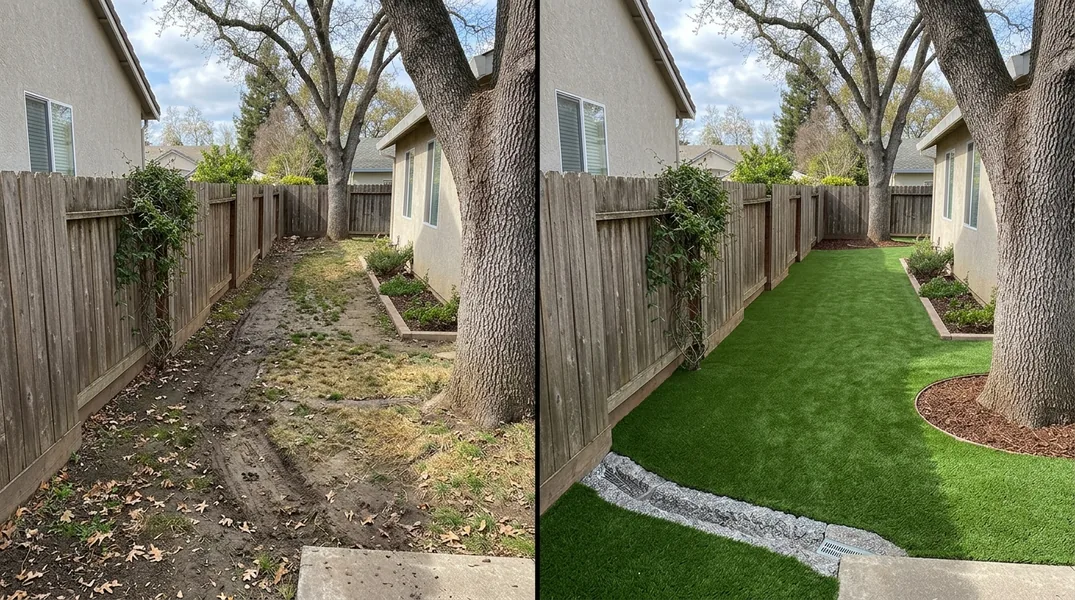
Why Sacramento's Soil Demands Special Attention for Artificial Grass
Sacramento homeowners face a unique challenge when installing artificial grass. Much of the region sits on dense clay soil or foothill granite, both of which present drainage obstacles that can undermine even the best turf installation if not handled correctly. Clay compacts easily and sheds water rather than absorbing it, while granite is impermeable by nature. These soil conditions mean that water doesn't percolate naturally, creating pooling and saturation issues that degrade your turf base and shorten the lifespan of your artificial grass investment.
Winter rainfall in Sacramento compounds this problem. Between November and March, the region receives consistent moisture that has nowhere to go if your base prep isn't engineered for drainage. Standing water beneath artificial grass leads to mold, odor, algae growth, and a spongy, unstable surface underfoot. That's why Residential Artificial Grass Installation in clay and granite areas requires a deliberate, layered approach to base preparation and drainage management.
Understanding Artificial Grass Underlay and Base Materials
The foundation of any successful artificial grass installation begins with choosing the right artificial grass underlay and base materials. Most homeowners don't realize that simply laying turf over existing soil is a recipe for failure. Your base needs to serve two purposes: it must provide stable, level support for the turf, and it must actively move water away from the installation. The typical layered approach starts with a geotextile fabric that sits directly on your existing soil, followed by a gravel or crushed stone layer, and topped with a specialized sand or recycled rubber infill base.
What you put under artificial grass matters enormously in Carmichael and surrounding areas where clay is prevalent. A quality geotextile acts as a barrier that prevents soil particles from migrating upward into your base layers while still allowing water to flow through. Above that, crushed limestone or recycled asphalt works well because it compacts firmly yet maintains permeability. The final layer, typically a 2 to 4 inch sand base, provides the cushion and leveling surface your turf needs. This layered system, when properly installed, creates a capillary break that stops moisture from wicking upward from dense clay below.
Turf Base Prep Techniques for Clay Soil Conditions
Preparing a clay soil base requires more aggressive intervention than sandy or loamy soils. The first step in proper turf base prep is grading and slope management. Your installation area should slope gently away from structures at a rate of about 1 to 2 percent (roughly 1 inch drop per 4 to 6 feet of run). This ensures that surface water doesn't pool against your house or create low spots where moisture collects. In clay areas, this grading step is non-negotiable because clay's impermeability means water won't infiltrate on its own.
After grading, the next critical step is breaking up and loosening the compacted clay. Depending on the severity of compaction, this might involve ripping the soil with heavy equipment or hand-tilling to a depth of 6 to 8 inches. Once loosened, a perforated underdrain system can be installed beneath your geotextile layer. This system, which consists of perforated pipe running toward a drainage outlet or French drain, actively pulls water away from your turf base. Over this, you'll install your geotextile, followed by 4 to 6 inches of crushed stone or recycled asphalt, and finally your sand leveling layer. The combination of slope, drainage pipe, and layered materials transforms problematic clay into a stable, well-draining foundation.
Managing Winter Drainage and Moisture in Granite-Heavy Areas
Granite and rocky foothill soils present a different but equally serious challenge. Unlike clay, granite doesn't compact, but it also doesn't absorb water. When winter rains fall on a granite base, water either runs off the surface or sits in pockets, creating the same pooling and saturation problems. Artificial grass drainage in these areas requires a system designed to capture and redirect water rather than rely on soil infiltration. The solution involves creating a subsurface drainage network that works in concert with your base materials.
Begin by installing a landscape fabric over the granite to prevent your base materials from settling into crevices. Then layer your gravel and sand as you would for clay, but add French drain systems or perforated underdrain pipes more aggressively. These pipes should run toward a lower point on your property where water can exit safely, whether that's a storm drain, a dry well, or a swale. Winter moisture management is particularly important because Fair Oaks and higher elevation areas of the region experience heavier rainfall and longer wet seasons. A well-designed drainage system ensures that your artificial grass remains firm and usable even during the wettest months, preventing the spongy, unstable feel that ruins the user experience.
Selecting the Right Materials for Sacramento's Climate
Not all base materials perform equally in Arden-Arcade and other Sacramento neighborhoods. Crushed limestone is an excellent choice for clay areas because it resists compaction and maintains drainage over time, while recycled asphalt works well for granite areas where you need a more stable, interlocking base. Avoid using fine sand or silt as your primary base layer, as these materials can clog and reduce drainage efficiency. Instead, choose coarser materials that maintain their permeability even after years of foot traffic and settling.
The infill layer that sits between your base and your artificial turf also matters. Silica sand is a common choice, but in wet climates, some homeowners prefer recycled rubber or a sand-rubber blend. These alternatives drain slightly faster than pure sand and reduce the chance of compaction over time. Your turf supplier should recommend materials specifically suited to Sacramento's winter moisture patterns. When you're ready to move forward, Sacramento Turf Installation can assess your specific soil conditions and recommend the ideal material combination for your property. Call us at (279) 264-1603 or request a free estimate to discuss your base prep needs.
Professional Installation Ensures Long-Term Performance
While understanding base prep and drainage is valuable, proper installation requires experience and the right equipment. DIY artificial grass projects often fail because homeowners underestimate the complexity of grading, drainage system installation, and material layering. A professional crew knows how to assess your specific soil type, design a drainage system tailored to your property's topography, and install each layer to the correct depth and compaction level. This expertise is especially critical in Sacramento, where soil conditions vary significantly from one neighborhood to the next.
Sacramento Turf Installation brings years of experience installing artificial grass on challenging clay and granite soils throughout the region. Our team handles every aspect of base prep and drainage, ensuring that your new turf will perform beautifully for years to come, even during heavy winter rains. Whether you're interested in Residential Artificial Grass Installation, Pet Turf & Dog Run Installation, or specialized applications like Pool Surround Turf, we understand that proper foundation work is the difference between a short-lived installation and a lasting investment. Contact us today at (279) 264-1603 or visit our website to learn more about how we can transform your yard with professional-grade artificial grass installation and expert base preparation.
Looking for a professional artificial grass installation company in Sacramento? Sacramento Turf Installation responds fast for all your artificial grass installation needs.
Get a Free Quote